
Themes of Visual Culture
- vanessagwds1199
- Apr 17, 2023
- 3 min read
Updated: May 2, 2023
Chapter 5 Reflection
In chapter 5, the focus lies on the importance of children studying their interests. This interest is what motivates students to explore and dive deeper into the interpretation of their subject of interest. These subjects are often grouped into themes and, as the textbook states, “The choices of art content has expanded in this age of infinite possibilities” (Freedman & Boughton, 2023, ch. 5 p. 2). With so many themes for students to choose from, it is important for us as art educators to pick themes wisely when discussing them in the classroom. We have to make sure they are relevant and appropriate for the level that students are at in their development. The chapter then goes on to discuss in depth six common themes that might be of interest to students. The first theme explained is science, both fact and fiction. In this section, the authors explain in depth the long history and connection between science and the art world, providing examples of their influence on each other. The next theme is nature and the environment. Discussed in this section is the use of natural materials when creating art as well as the creation of a nature scene such as landscapes or nature photography. After that comes the section on community, family, and friends. The authors explain how this is especially important for younger kids because, “When students begin elementary school, their learning focuses heavily on the development of identity” (Freedman & Boughton, 2023, ch.5 p. 12). Children at a young age tend to focus a little more on the immediate world around them that includes their family and friends before they start branching out into more complex themes. The next section is about the global community. This is usually a theme focused on by kids that are a bit older and also where ideas surrounding political or social issues become more prevalent The next theme discussed is one that encompasses all of fantasy, history, and legends. When it comes to fantasy in particular, the authors say “Students often find fantasy a strong creative motivator and their interest in fantasy may last into adulthood” (Freedman & Boughton, 2023, ch. 5 p. 24). Fantasy is a theme that children can gain a real attachment towards so it is important for art teachers and other adults to guide them in their viewing and interpretations of this genre. The last theme is non-objective art and design with the authors giving a description “first of Abstract Expressionism” before going on to describe non-objective art with some examples of it provided. This chapter ends with talking about the importance of encouraging students to make their own decisions while still maintaining some structure and level of control as the art instructor.
I really enjoyed reading in this chapter about the different themes that students may choose to focus on. I like how the authors went into depth on each theme and explained the connections between the theme and the art world with some examples included. One part in particular that really resonated with me especially was the last section before the conclusion. This is where the authors say “Students should be enabled to make an ever increasing number of their own decisions about artistic production and interpretation as they learn about visual culture” (Freedman & Boughton, 2023, ch. 5 p. 31). I think it was really important for the authors to mention how important it is to give students some freedom in their choices while also stressing that it is a gradual process with educators needing to keep some responsibility and control, especially with a younger group.
I love the idea of teaching in themes for my future art class. I think picking a theme to focus on is a way to make lessons more interesting and engaging for both myself and the students. Personally, I already do that with my own art where I pick a theme for the semester and try to revolve all my art productions on this theme. It makes it both fun and challenging to try and figure out how to create a piece that fulfills the different project requirements but still connects with my chosen theme. Even if it is not a singular theme chosen for the whole semester, I would love to give my class a couple of projects that can connect together like that and build upon one another.
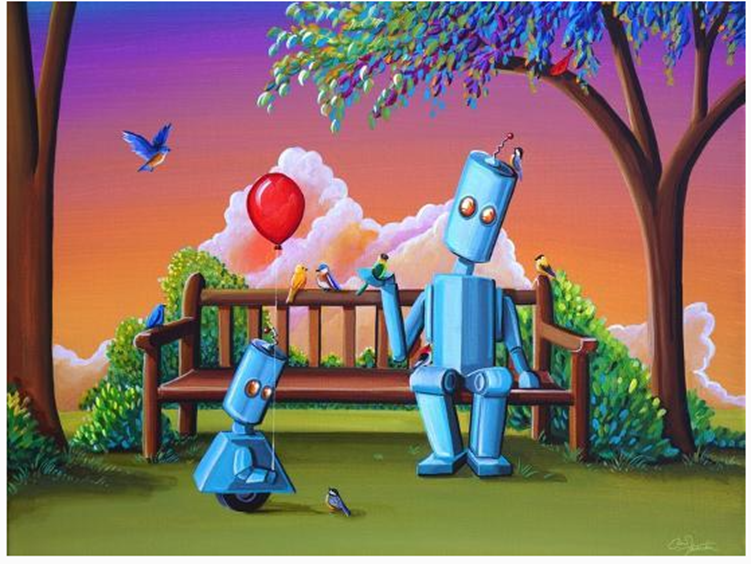
Making Friends by Cindy Thornton
References:
Freedman, K. & Boughton, D. (2023). Elementary Art Education: A Practical Approach to Teaching Visual Culture [Unpublished manuscript]. Art and Design Education, Northern Illinois University.
Thornton, C. Making Friends. art.com. Retrieved February 11, 2023.


